ROH LEEJIN KOREA
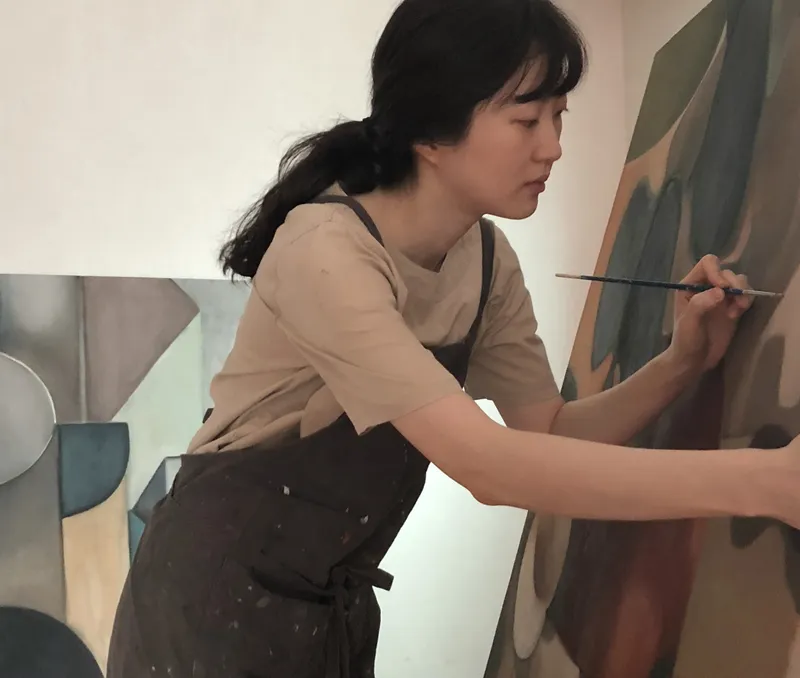
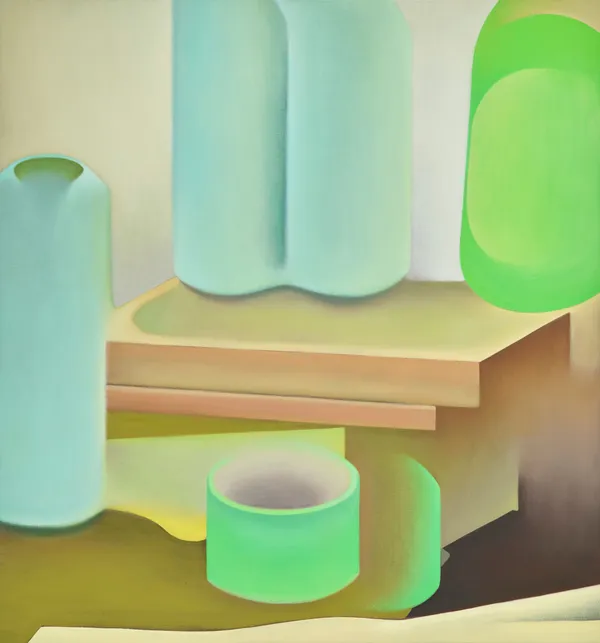
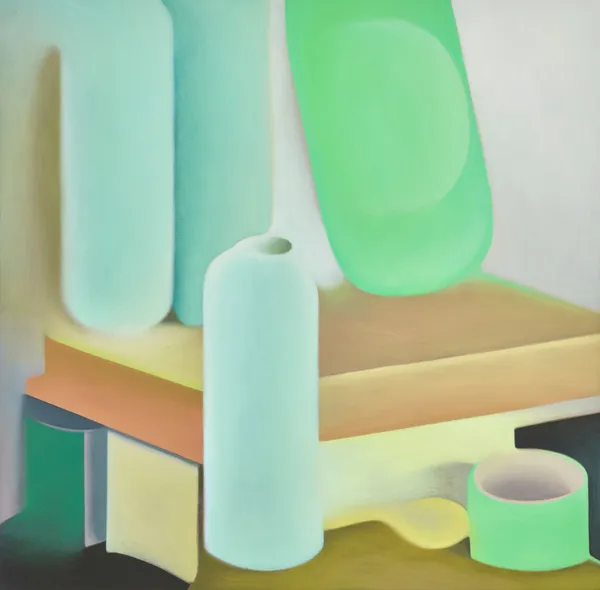
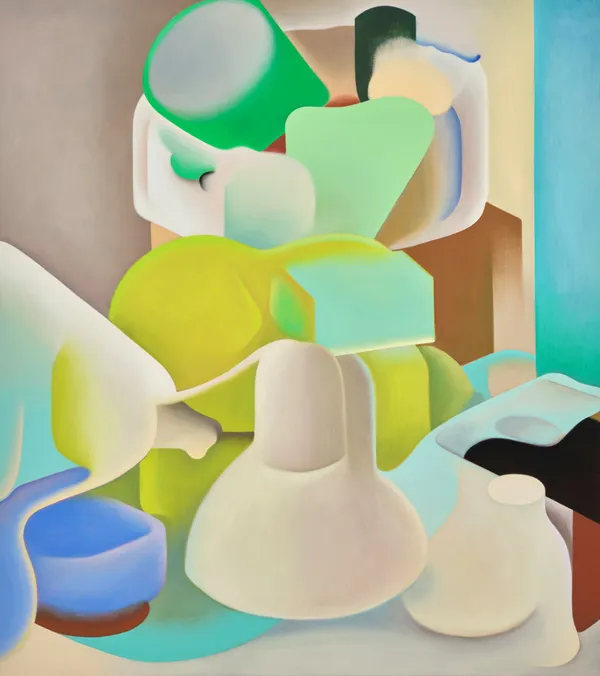
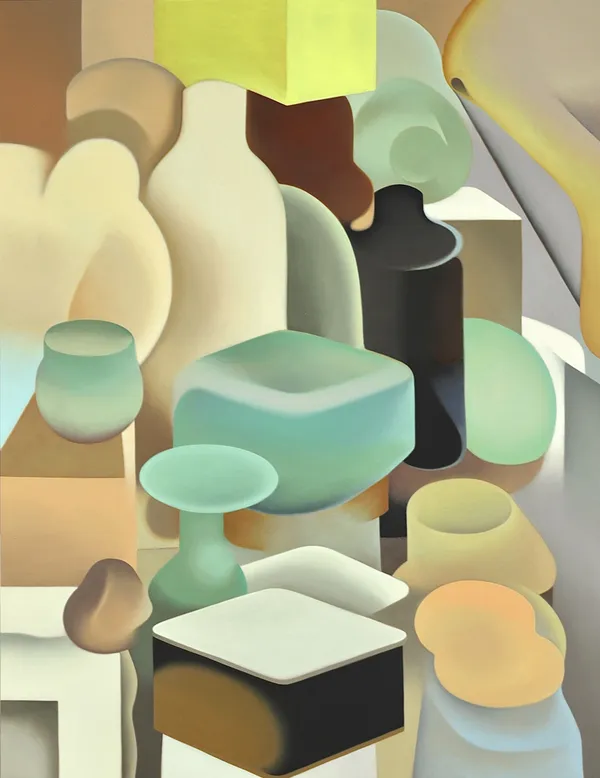
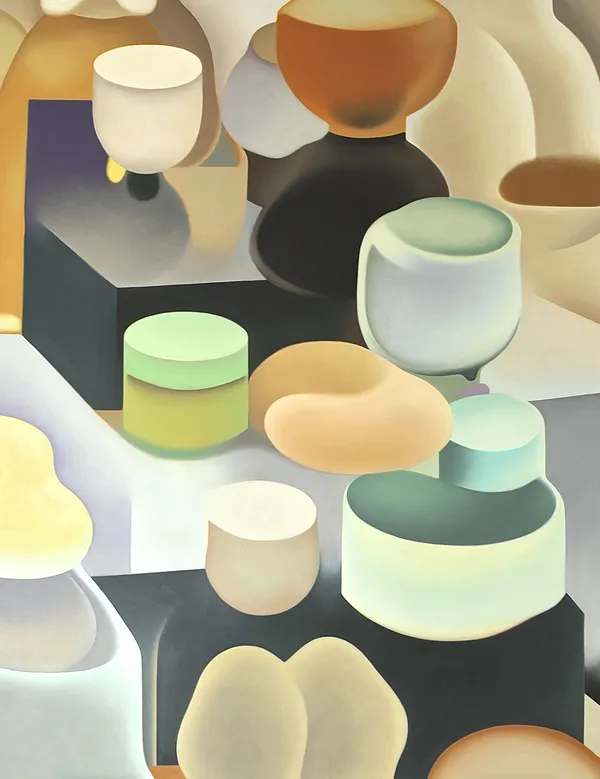
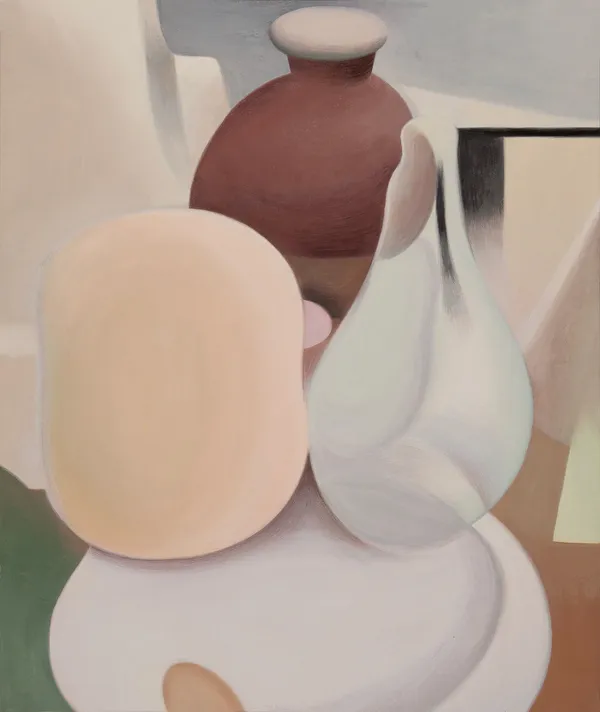
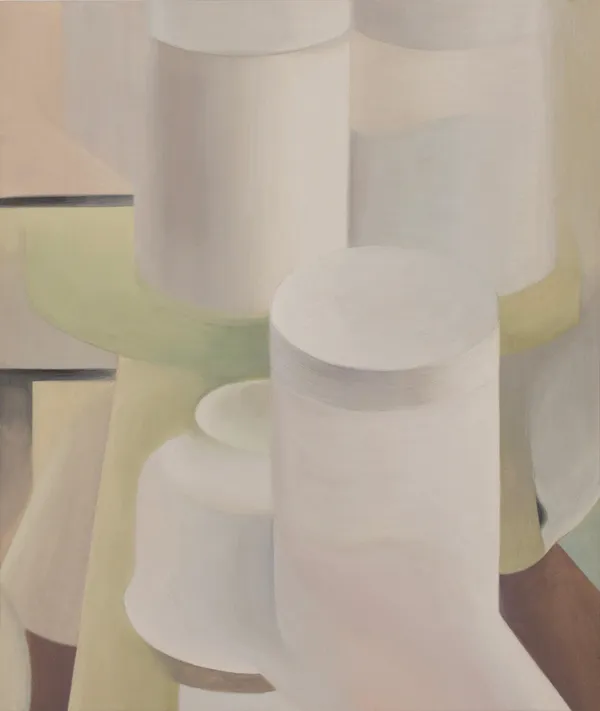
Roh Lee-jin reinterprets everyday objects through her own perceptual language. While we typically encounter objects through their names or functions, she deliberately sidesteps this mode of recognition. A cup is no longer a “tool for drinking,” but a curved mass; a plant is not a “living entity in a pot,” but a layered field of color shifting in response to light. By suspending function and concept, she focuses instead on surface sensation, the flow of boundaries, and the interplay between color and light.
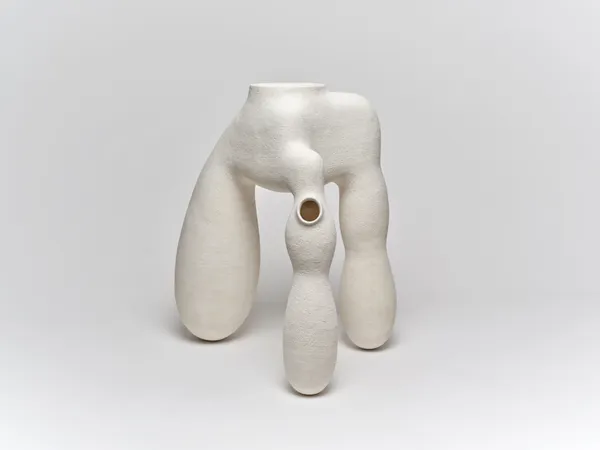
Her background in ceramics at Seoul National University provides a crucial foundation for her painting. The tactile awareness of volume and structure developed through working with clay carries directly onto the canvas. Despite their two-dimensional format, her works possess a palpable sense of mass and presence. Color is not simply applied, but layered and absorbed to build density, while line does not divide forms but connects them organically. As a result, her paintings hold a simultaneous sense of flatness and spatial depth.
Her compositions bring together vivid chromatic forms, linear structures, gently curving lines, and opaque overlapping layers. These elements initially appear discrete, yet gradually connect, with some dissolving into shadow. In this process, the boundaries of individual objects blur, giving rise to new images that did not previously exist. Rather than depicting objects, her work visualizes the movement of perception itself.
What matters in her practice is not what is depicted, but how it is seen. Objects are not fixed entities, but afterimages of perception—residual sensations left where the gaze has lingered and passed. This is why forms remain open and unresolved. Instead of offering clear answers, her paintings invite viewers to move between color and form, naturally projecting their own experiences and memories.
Roh Lee-jin removes the meanings assigned to objects by systems and conventions, reconstructing them through her own visual and perceptual sensibility. The resulting configurations of color and mass generate a distinct rhythm, rendering familiar, often overlooked elements of daily life both strange and singular. Her paintings do not explain objects; they reveal the act of perceiving itself.
-
 25-painting-17, 2025
 -
25-painting-19, 2025
-
25-painting-5, 2025
-
24-painting-5, 2024
-
24-painting-6, 2024
-
23-painting-10, 2023
-
23-painting-13, 2023
-
22-sculpture-9, 2022